
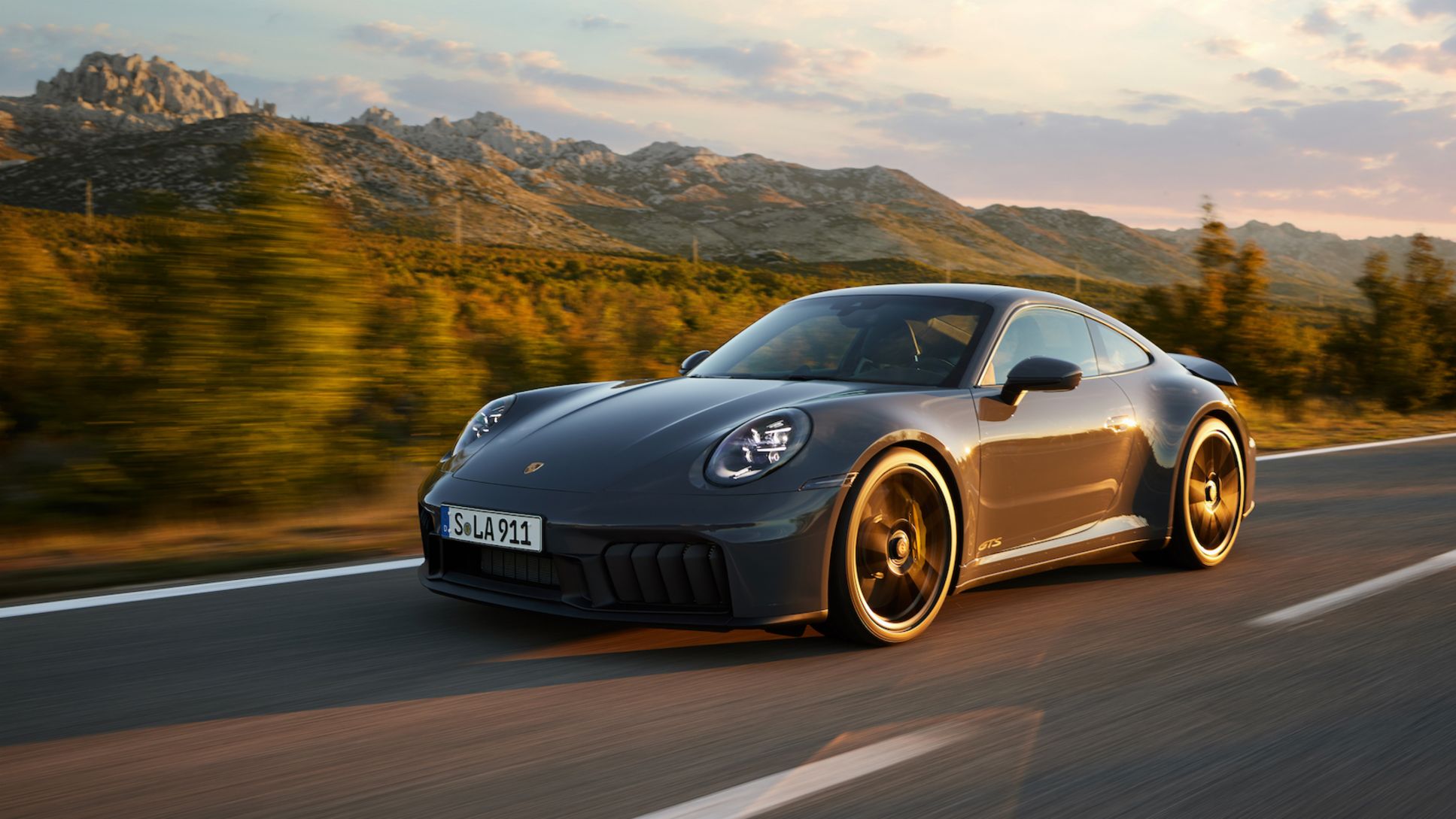
The Entry-Level Legend
The 2025 Porsche 911 Carrera represents everything that makes the iconic sports car legendary, wrapped in its most accessible package. After extensive testing through city streets, highway cruising, and spirited backroad drives, one thing becomes crystal clear: this base model delivers performance that would shame many supercars while maintaining the daily usability that has defined the 911 for decades. The question isn't whether the Carrera lives up to the 911's reputation – it's whether you need anything more than what this remarkable machine offers.

2025 Porsche 911
View ListingsPros
- Exceptional daily driving comfort and practicality
- Mind-bending grip and handling precision
- Refined twin-turbo flat-6 engine with 388 hp
- Outstanding fuel economy for a sports car
- Logical interior layout with quality materials
Cons
- No manual transmission option available
- Engine lacks character until high RPMs
- Adaptive cruise control requires frequent intervention
- Wireless charger overheats phones consistently
- Clinical feel may disappoint emotion-seekers
Performance That Defies Physics
The heart of the 2025 Carrera beats with a twin-turbocharged 3.0-liter flat-six engine producing 388 horsepower and 331 lb-ft of torque. While the power increase over the previous generation amounts to just 9 horsepower, the real-world impact feels significant. Zero to 60 mph arrives in just 3.9 seconds, dropping to 3.7 seconds with the Sport Chrono Package – figures that would have been supercar territory just a decade ago. The eight-speed PDK dual-clutch transmission shifts with surgical precision, though purists will lament the absence of a manual option. What truly impresses isn't the raw acceleration numbers, but how effortlessly the Carrera deploys its performance while maintaining composure that borders on supernatural.
Interior Excellence Meets Modern Tech
Step inside the 2025 Carrera and you're greeted by an interior that balances traditional Porsche design cues with modern functionality. The new digital gauge cluster replaces the iconic analog tachometer, delivering crisp graphics and customizable displays that enhance the driving experience. Physical controls remain thankfully abundant, with logical placement that makes operation intuitive even during spirited driving. The optional 18-way adjustable seats provide exceptional comfort for drivers of all sizes, while build quality throughout feels worthy of the premium price point. However, some technology implementations miss the mark – the wireless charging pad doubles as an inadvertent phone heater, and the adaptive cruise control system proves frustratingly inconsistent in traffic situations.
Daily Driver Practicality
Perhaps the 911's greatest achievement lies in its ability to serve dual roles as both weekend warrior and weekday commuter. During testing, the Carrera averaged an impressive 27 mpg on highway runs while never feeling underpowered in city traffic. The compact dimensions make parking effortless, while ground clearance proves adequate for normal driving situations. Cargo space, while limited, handles grocery runs and weekend trips with surprising capability. The rear seats exist more as storage cubbies than passenger accommodations, but this trade-off enables the 911's distinctive silhouette. Most remarkably, the Carrera never feels like a compromise during mundane daily tasks – it simply transforms from sports car to sophisticated grand tourer depending on your right foot's demands.
Value Proposition Analysis
Starting at $120,100 including destination charges, the 2025 Porsche 911 Carrera positions itself as the entry point into one of motoring's most exclusive clubs. Our test vehicle, loaded with $28,055 in options, reached $148,155 – a figure that places it squarely in luxury sports car territory. Yet when compared to traditional pricing tools and online valuation services, the Carrera delivers performance and prestige that rivals machines costing significantly more. The key insight from our testing: stepping up to the Carrera S provides minimal real-world benefits for most drivers. This makes the base Carrera not just the most affordable 911, but potentially the smartest choice for buyers seeking the complete 911 experience without unnecessary complexity or cost.
The Verdict: Near-Perfect Execution
The 2025 Porsche 911 Carrera earns a rating of 9.2 out of 10 for delivering everything most drivers need from a sports car legend. Its combination of accessible performance, daily usability, and engineering excellence creates a package that's nearly impossible to fault on objective grounds. The few criticisms – clinical feel, technology hiccups, and lack of manual transmission – pale against the Carrera's overwhelming competence. This is a machine that excels at being exactly what it promises: the most attainable way to experience automotive greatness. For buyers who've dreamed of 911 ownership, the base Carrera proves that sometimes the entry-level option is all the car you'll ever need.
Find Your Perfect Sports Car
Ready to explore high-performance vehicles? Carma's community-driven platform helps you discover real-world pricing data and negotiate better deals on sports cars.
Frequently Asked Questions
Is the 2025 Porsche 911 Carrera worth buying over higher trim levels?
Absolutely. Our testing revealed that the base Carrera delivers 95% of the 911 experience at a significantly lower price point. The performance gap between the Carrera and Carrera S is minimal in real-world driving, with both sharing the same exceptional handling characteristics and build quality. Unless you specifically need the additional power for track use or have money to burn, the base Carrera provides everything most drivers want from a 911. The $20,000+ savings over higher trims can be better spent on meaningful options like the Sport Chrono Package or premium interior appointments.
How practical is the 2025 Porsche 911 Carrera as a daily driver?
Surprisingly practical. During our week-long test, the Carrera handled everything from grocery runs to highway commuting with ease. The compact size makes city parking effortless, while the refined ride quality and comfortable seats make long drives pleasant. Fuel economy averaged 27 mpg on highway trips – impressive for a 388-horsepower sports car. The biggest compromises are limited cargo space and virtually unusable rear seats, but these rarely pose problems for typical daily driving scenarios. Unlike many exotic sports cars, the 911 doesn't scrape on driveways or feel fragile in normal use.
What are the main differences between the 2025 and previous 911 Carrera models?
The 2025 model year brings subtle but meaningful updates to the 911 lineup. Power increases by 9 horsepower to 388 total, thanks to larger turbos borrowed from the previous GTS model. The traditional analog tachometer gives way to a fully digital gauge cluster with crisp graphics and customizable displays. Exterior changes include redesigned taillights and revised front air intakes that give the car a slightly more aggressive appearance. The interior gains improved materials and updated infotainment, while new Matrix LED headlights become standard. These changes maintain the 911's evolutionary approach rather than revolutionary updates.
Should I wait for a manual transmission option in the base 911 Carrera?
Unfortunately, manual transmissions are no longer available in the base Carrera – you'll need to step up to the Carrera T or GT3 models for a stick shift. However, the eight-speed PDK dual-clutch automatic in the Carrera is genuinely excellent, offering lightning-fast shifts and multiple driving modes. While purists may mourn the loss of the manual option, the PDK transmission actually enhances daily usability and delivers quicker acceleration times. Unless rowing your own gears is absolutely essential to your sports car experience, the PDK shouldn't be considered a compromise – it's simply a different but equally valid way to enjoy the 911 experience.
Ready to save on your next car?
Join the Carma community and get access to real deal data from thousands of car buyers.